What Is a Content Hub for Medical Affairs
Discover what is a content hub and how it transforms medical affairs. Learn to govern MOA videos, ensure MLR compliance, and scale scientific reuse.
A content hub for medical affairs is a governed distribution layer built on top of a central asset repository, exposing only approved, compliance-vetted materials for reuse. It connects scientific content creation, storage, validation, and delivery, ensuring scientific integrity and controlled access to current, traceable content across various channels and users.
What is a content hub for regulated industries?
Regulated organizations need two things from a content hub at once: discoverability for public education and control over unpublished clinical material. Only the second is usually missing. A public-facing editorial structure can organize a disease-awareness topic, connect supporting pages, and guide readers through related information. It cannot govern the scientific assets behind that experience.
Pharmaceutical teams also manage approved claims, reference documents, audience permissions, expiration dates, and market-specific versions. A blog architecture does not provide those controls. It may support patient education, but it cannot determine whether an MSL, medical writer, agency, or external partner is using the current, authorized version of an asset.
Enterprise content hub guidance from Kentico describes a content hub as a centralized repository for content, media, and related assets that supports creation, management, and reuse across channels. For medical affairs, that definition is useful because it connects governance with distribution. The hub becomes a single source of truth for approved materials, rather than a collection of pages designed mainly to attract visits.
The distinction that changes the operating model
A marketing resource center primarily helps users find information. A regulated content operations platform also controls what they can access, how they may reuse it, and whether the asset remains valid. Those requirements shape ownership, permissions, metadata, and review procedures.
Adobe's Content Hub overview describes a governed environment in which broader teams can access relevant approved assets without depending entirely on central creative teams. In medical affairs, that means controlled self-service. Field teams can work from validated materials, while central functions retain authority over approval and access.
Practical rule: If a system cannot distinguish approved scientific content from draft or expired content, it is storage with a search box, not a regulated content hub.
Judge the hub by operational outcomes, not external traffic alone. It should reduce duplicate scientific narratives, make review evidence visible, and let authorized teams reuse modular content without bypassing governance. Those controls matter more as AI systems summarize, repackage, or surface content outside its original page.
What are the core architecture and governance mechanics of a content hub?
A content hub connects creation, storage, approval, and delivery through one controlled workflow. Its repository may contain source documents, figures, presentations, videos, references, and reusable modules, but downstream users should see only assets cleared for their role and channel. The system exposes approved materials rather than the entire source library, limiting the risk that unvetted content reaches field teams, agencies, partners, or external audiences.

A shared drive illustrates the failure mode. Folders named “final,” “final approved,” and “final approved latest” create uncertainty where reviewers need confidence. A folder can store a file, but it cannot enforce a scientific workflow, prevent access to a draft, detect a changed reference, or route a claim to the appropriate reviewer. Naming conventions are a symptom, not a governance solution.
The control points that matter
A pharma-grade architecture usually includes these operational layers:
- Source ingestion: Publications, internal scientific documents, approved labels, study materials, and existing assets enter through a controlled intake process.
- Metadata and identifiers: Each asset records its indication, audience, market, owner, approval state, references, permissions, and review status.
- Approval gates: Medical, legal, and regulatory reviewers determine whether an asset can move from draft to approved distribution.
- Version control: The system preserves links between current and previous versions, reducing the risk that users rely on an obsolete claim.
- Role-based access: Permissions determine whether a user can view, edit, approve, export, or distribute an asset.
- Delivery controls: Approved materials become available to defined teams or channels without exposing the full repository.
The source document management workflow shows why identifiers, metadata, version control, and role-based access belong in the operating model, not in an after-the-fact filing exercise. Those controls let the organization answer who approved an asset, which evidence supports it, and whether a newer version superseded it.
The operating rule is direct: approval must control exposure. Users should not have to interpret filenames or ask colleagues which presentation is current. The hub should make the compliant choice the easiest choice, while preserving the evidence and permissions needed for medical affairs and MLR oversight.
How do content hubs compare to traditional CMS and DAM systems?
Medical affairs teams often ask whether they already own a content hub because they have a CMS, DAM, or PIM platform. Usually, they have part of the required infrastructure. The missing capability is orchestration, specifically the governed movement of modular content from scientific source material to approved downstream use.
A DAM provides a managed home for files. It supports organization, retrieval, rights management, and asset preservation. A CMS manages pages and publishes web experiences. A PIM organizes structured product information for consistent use across commercial and operational channels. A content hub can use these systems, but its defining role is different. It coordinates approved content for reuse by people and systems that need context, permissions, evidence, and channel readiness.
| System Type | Primary Function | Compliance Focus | Ideal User |
|---|---|---|---|
| Content hub | Governed reuse and distribution of modular content | Approval state, evidence, version, access, and downstream control | Medical affairs, MLR, field medical, scientific communications |
| DAM | Storage, organization, retrieval, and rights management for assets | Permissions, usage rights, metadata, and asset status | Creative operations, brand teams, agencies |
| CMS | Creation and publication of web pages and digital experiences | Publishing permissions, workflow, accessibility, and content changes | Web, editorial, and digital marketing teams |
| PIM | Management of structured product information | Data consistency, ownership, and controlled syndication | Product, commercial operations, ecommerce, and sales teams |
Where the systems overlap
The boundaries aren't rigid. A DAM may include approval workflows, while a CMS may contain reusable components. Some enterprise platforms now describe content hubs as extensions of DAM capabilities, combining secure storage with collaboration, approval, and distribution. Canto's explanation of content hubs makes the useful distinction that storage addresses where content lives, while a broader hub addresses how content is created, approved, and distributed.
The problem starts when a team treats one system as a substitute for the whole operating model. A DAM might show that a file is approved, but it may not explain which scientific statement within a video is supported by which publication. A CMS may publish the correct page, but it isn't designed to govern internal reuse of an unpublished clinical figure. A PIM can keep product fields consistent, but it won't replace MLR review of a medical narrative.
How to choose the right system based on control needs
Technology selection should begin with the risk and workflow question, not the product category.
If the main problem is finding brand files, improve the DAM. If the problem is publishing web pages, improve the CMS. If structured product data is inconsistent across channels, assess the PIM. If the problem is that teams create, approve, adapt, and reuse scientific content across functions without a reliable evidence trail, the organization needs a governed content hub layer.
A hub should integrate with the existing stack rather than forcing every function into one application. The strongest architecture lets each system do its primary job while giving medical affairs a controlled path from source evidence to approved, reusable content.
How can a content hub accelerate MOA video and scientific workflows?
Mechanism of action content exposes the weakness of disconnected systems quickly. An MOA video combines scientific interpretation, visual sequencing, narration, references, design decisions, and review comments. If those elements live in separate tools, a reviewer may approve the script without seeing the evidence connection for each visual claim.
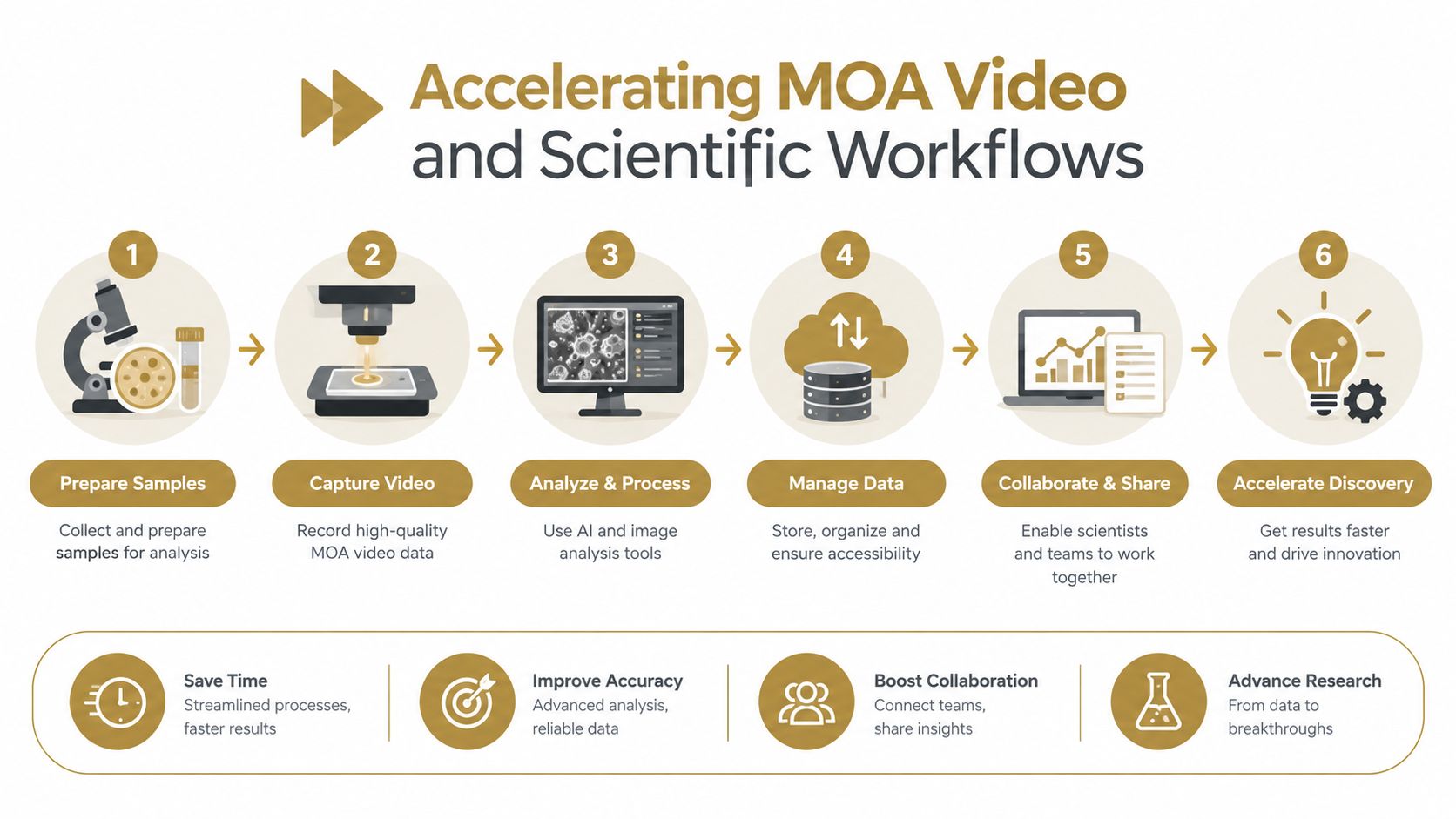
A governed hub changes the workflow by treating the evidence relationship as part of the asset. The process can begin with source publications and internal scientific documents, move through structured extraction and content generation, and then route the resulting video, presentation, and supporting files through scientific and MLR review.
A practical workflow for an MOA asset
- Ingest the evidence. The team adds publications, internal documents, approved references, and relevant product information to the controlled workspace.
- Extract the scientific narrative. The workflow identifies mechanisms, entities, relationships, and claims that require visual or written treatment.
- Generate modular outputs. The system creates a draft animation, presentation, narration, or supporting document from the defined scientific inputs.
- Attach evidence at claim level. Sentence-level references connect individual scientific statements to their supporting sources, giving reviewers a direct route back to the evidence.
- Run scientific validation. Accuracy controls identify ambiguity, unsupported wording, or discrepancies between the source material and the generated output.
- Route for governed approval. MLR reviewers assess the controlled version, record the decision, and expose only the approved output for downstream use.
In scientific video workflows, scientific video workflows need to differ from ordinary creative production. A visually polished animation isn't sufficient if the review team can't inspect the scientific basis of its narration and imagery. Scientific reviewers need to see not only the final frame, but also the provenance of the statement represented by that frame.
VarsaAI is one example of a platform that combines source ingestion, MOA video and presentation generation, sentence-level referencing, scientific accuracy controls, and a centralized library for approved medical affairs materials. Its stated workflow supports producing these outputs in minutes rather than following a traditional agency cycle, but the operational value still depends on the organization's review criteria and governance design.
A fast draft is useful only when the evidence trail survives the trip from source document to final asset.
The hub also supports controlled iteration. If a reviewer changes a scientific phrase, the system should preserve the relationship between the revised text, the affected visual, the source reference, and the approval decision. That makes the next version easier to assess without treating every revision as a completely new investigation.
What are the strategic benefits of a content hub for Medical Affairs and MLR Teams?
The case for a governed hub isn't based on convenience alone. It rests on a practical risk equation: the more often teams recreate scientific content independently, the more opportunities they have to introduce inconsistent wording, outdated references, or unsupported interpretation.
Centralization reduces that exposure when it preserves modularity. A medical affairs team might approve a scientific explanation, a figure, a reference block, and a standard safety statement as distinct components. Authorized users can then assemble those components for a presentation or field resource without copying text from an old slide deck or downloading an uncertain file from an archive.
How does self-service work with a content hub?
The right hub gives field medical and MSL teams access to approved material while keeping the boundaries visible. Self-service doesn't mean every user can edit everything. It means the system makes the authorized options easy to find and clearly separates them from drafts, restricted documents, and expired assets.
This model also reduces dependency on a central creative team for routine adaptations. A medical writer can reuse a validated module, a reviewer can inspect the source relationship, and a content owner can retire an asset centrally. The organization gains speed without trading away accountability.
Why is consistency a scientific control?
Message consistency isn't only a branding concern. In life sciences, inconsistent descriptions of a mechanism, population, endpoint, or safety consideration can create review friction and confuse users. A centralized library helps teams work from the same approved language and evidence set.
Adobe's enterprise content hub explanation describes the broader shift toward modular content, centralized workflows, and reuse beyond a single webpage. For medical affairs, the implication is direct: content should be designed as controlled components that can travel across presentations, videos, field resources, and educational experiences while retaining their context.
How must security follow the content lifecycle?
Scientific content can be sensitive before publication, particularly when it includes unpublished clinical information or internal interpretation. Access control, audit history, and export permissions need to operate throughout the lifecycle, not only after a file is approved.
A hub also clarifies responsibility. Medical owns scientific validity, legal assesses legal exposure, regulatory reviews applicable requirements, and content operations manages workflow integrity. The platform doesn't replace those decisions. It gives each function a visible place in the decision chain.
What is the implementation checklist and what are the success metrics for a content hub?
A governed hub should launch as an operating model, not as a software installation. Begin with the content and decisions that create the most friction, then design the system around how those materials move through scientific review and downstream use.
How to build the foundation deliberately
- Audit the existing library. Identify where publications, presentations, videos, figures, and templates live. Mark duplicates, uncertain ownership, obsolete versions, and assets with missing references. Don't migrate every file just because it exists.
- Define the approval taxonomy. Use clear states such as draft, in review, approved, restricted, expired, and retired. Each state should have an owner and a rule for who can access or change it.
- Create a metadata model. Capture therapeutic area, product, indication, market, intended audience, content type, evidence source, owner, review status, and expiry information. Metadata should support a real decision, not become an administrative burden.
- Design role-based permissions. Separate viewing, editing, approval, export, and administration. Field users may need approved downloads, while reviewers and content owners need broader context.
- Embed MLR workflow. Define submission requirements, reviewer responsibilities, change handling, approval records, and escalation paths before teams begin production.
- Connect generation tools carefully. AI can accelerate drafting and adaptation, but every generated scientific claim needs validation and traceability. Keep source documents and generated outputs connected.
- Pilot with a bounded use case. Choose a content family such as MOA materials, clinical presentations, or field medical resources. Test retrieval, review, reuse, and retirement before expanding the taxonomy.
- Train for decisions, not buttons. Users need to know which asset to select, when reuse is permitted, and what to do when the required material doesn't exist.
How to measure control and usefulness
Avoid measuring success through downloads alone. A frequently downloaded asset may be popular because users can't find the correct alternative, or because teams repeatedly retrieve it without understanding its restrictions.
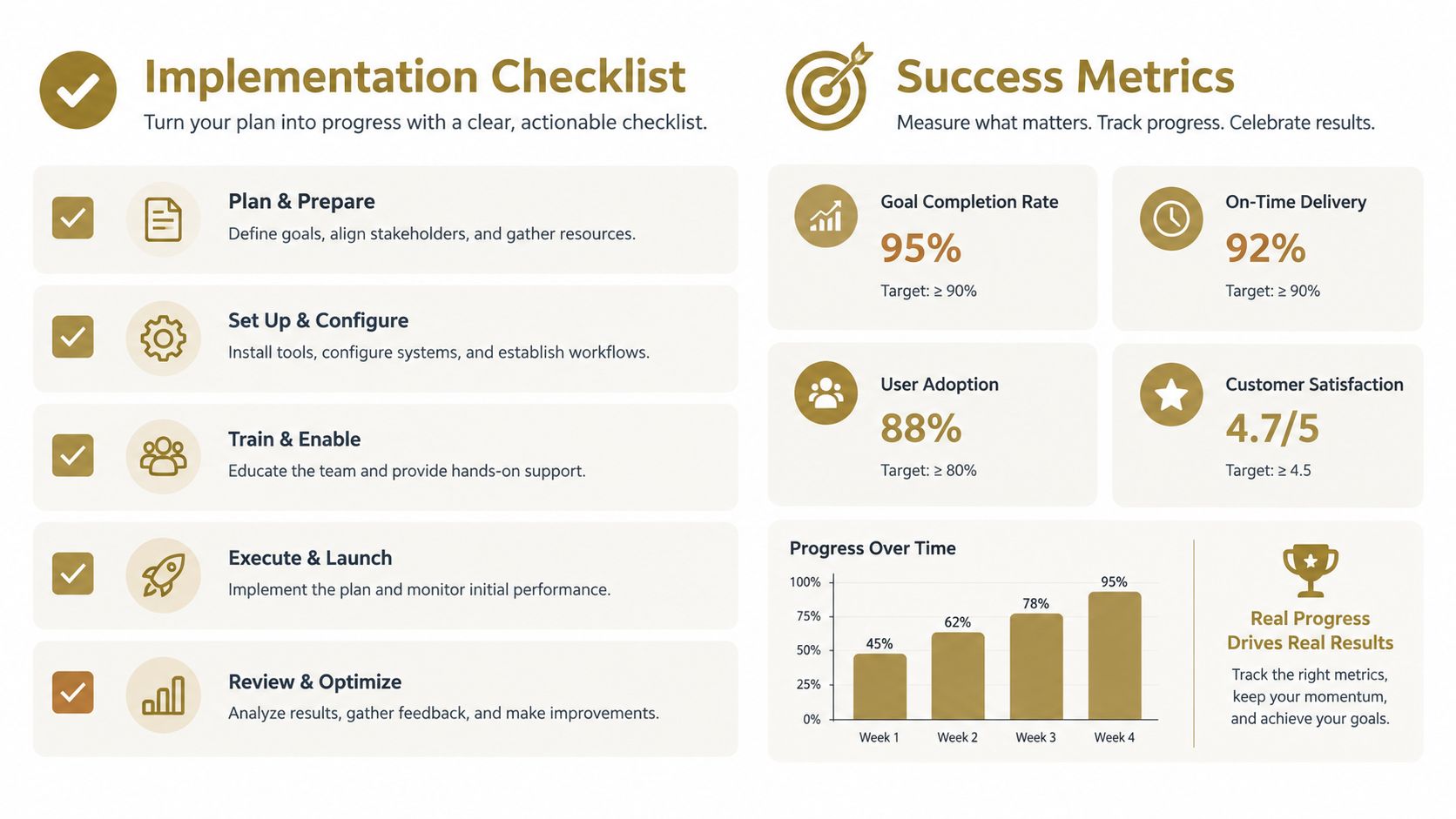
Track time to approval, from complete submission to decision. Track reuse of approved modules, but interpret the metric alongside quality checks. Monitor the share of active assets with complete evidence, owner, version, and approval metadata. Review audit findings, expired-asset exposure, and the frequency of rework caused by missing references or unclear ownership.
Measurement principle: A hub succeeds when it makes compliant reuse easier than independent recreation.
Also ask qualitative questions. Can an MSL find the right asset without contacting central operations? Can an MLR reviewer trace a claim to its source? Can a content owner retire an outdated module without hunting through every downstream presentation? These answers reveal whether the hub is functioning as governance infrastructure rather than as another repository.
How can a content hub future-proof scientific content operations?
The definition of a content hub is expanding because content no longer moves through one predictable channel. A scientific explanation may become a presentation, a video, a field resource, a web page, or an answer generated by an AI-enabled interface. The organization needs the underlying evidence and approval context to travel with the content.
That makes the public SEO blog-cluster model incomplete. Organic discovery still matters for appropriate public education, but a hub built only around rankings is fragile when search interfaces provide summaries, featured answers, or zero-click experiences. The more durable asset is a structured, reusable scientific knowledge system that can support multiple outputs while retaining governance.
How to design for reuse beyond the webpage
Modular content should have enough context to remain safe when separated from its original format. A claim needs its source, audience, market, status, and limitations. A visual needs to remain connected to the scientific interpretation it represents. A presentation should reveal which components are approved and which require additional review.
This is the purpose of source traceability in scientific content. Traceability isn't a decorative citation layer. It helps reviewers and future content owners understand how an asset was constructed, which evidence supports it, and what must change when the evidence or approved language changes.
The most resilient hub will combine structured metadata, evidence relationships, access control, version history, and channel-aware delivery. It will support AI-assisted production without allowing automation to weaken scientific accountability. It will also give medical affairs a stronger role in content operations, because scientific governance becomes part of the system's architecture rather than a final checkpoint.
For regulated organizations, the answer to what is a content hub should therefore be operational: it is the controlled distribution layer that turns approved scientific knowledge into reusable, auditable content. The public website may be one spoke. The hub is the governed system that keeps every spoke connected to the right evidence.
Frequently asked questions
- Why is a content hub definition for pharma different from general marketing guidance?
For pharma, a content hub must solve the operational challenge of ensuring scientific assets are approved, current, traceable, and safe for specific users or channels, beyond just public discoverability. It focuses on governance and controlling unpublished clinical material, not merely public SEO collections.
- What is the primary distinction between a marketing resource center and a regulated content operations platform?
A marketing resource center primarily helps users find information. A regulated content operations platform additionally controls content access, reuse permissions, and validity, shaping ownership, metadata, and review processes essential for compliance in regulated industries.
- How does a content hub prevent the risks associated with shared drives?
A content hub enforces scientific workflows, prevents access to drafts, detects changed references, and routes content for appropriate review. Unlike shared drives, it doesn't rely on unreliable naming conventions, ensuring only approved and current materials are accessible.
- Why is source traceability critical for modular content in a regulated content hub?
Source traceability ensures that modular content, even when separated from its original format, retains its scientific basis, audience context, market, status, and limitations. It allows reviewers and future content owners to understand content construction and evidence, facilitating necessary updates.
- What qualitative questions help determine a content hub's success?
Qualitative success metrics include whether MSLs can find approved assets independently, if MLR reviewers can trace claims to their sources, and if content owners can retire outdated modules efficiently. These questions reveal if the hub effectively functions as governance infrastructure.
Add the trust layer to your LLM.
Every claim verified, every citation listed — inside your existing AI workflow.
Get pricing →